


Women / Men







Journal
Subheading
Aran Knitting Myths and Legends; Timeless Value and Beauty crafted
If you are to wander through the buzzing streets of Galway City, Dingle, Donegal, or Dublin’s Fair City, you might notice the lore of the ancient Aran sweater reverberating in the air. You may see the intricate Báinín knitwear presented smartly in storefronts, and you might just hear a tour guide or shop owner tell of blackberry stitches, Celtic knots, and fishermen facing peril off rocky island shores.
The iconic Aran knitwear holds its place in our collective conscious as a bedrock element of ancient Irish craft. Yet, with further thought, one might begin to question how much of the lore is mythic in nature and how we can best honour the integrity of what the skilful craft represents.

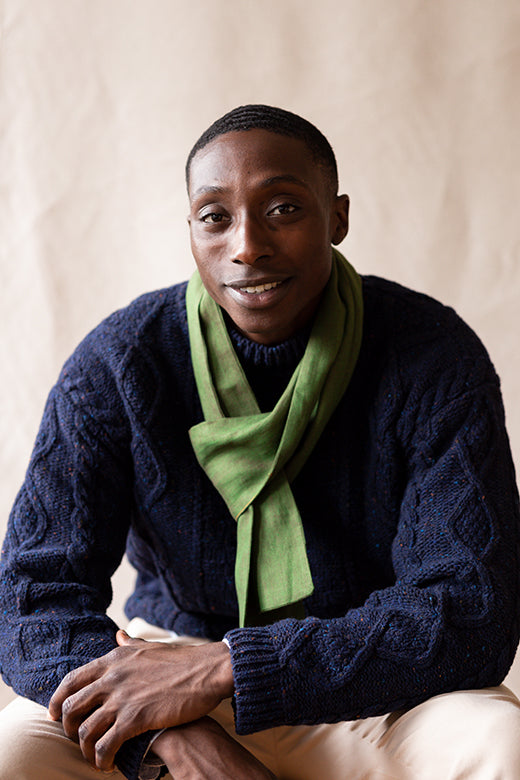
Let’s begin with the Aran stitches, thought to hold various meanings with ties to ancient Celtic symbology. There is the famous cable stitch representing the fishing ropes of the remote island dwellers, the diamond stitch being their fishing nets and a symbol for success and wealth, while the zig-zag stitch symbolising the tumult of marriage, and the honey-comb stitch speaking of honeybees, hard work and plentiful rewards. The trellis stitch paints stone-walled fields and gives protection, and the Tree of Life stitch brings in the centrality of family and one’s ultimate rite of passage.
These intricate forms with which we warm our bodies can intimately connect us with our ancestors through the stories they tell. It is a beautiful and special feeling to know this, but it’s also fun to put our investigator spectacles on and get nerdy about the substance within the tales.

Knowing that there is a small economy that encircles the iconic Aran knit, it is safe to assume that people aside from just the crafters have an interest in the fantasticality of its lore and history. This might be best exemplified by Oxford yarn store owner and ‘textile journalist’, Heinz Edgar Kiewe, who published a book called Sacred History of Knitting in 1971. An enticing title indeed, Kiewe took to drawing links between the Aran stitchwork and ancient Irish illuminated manuscripts. With such certainty did he make these connections, that the descriptions took sail along with the Aran sweaters on their journeys to the United States and other destinations.
As with any good story, it developed wings and tails and spikes. And so came the dazzling notions of each clan having their own Aran pattern, being a way to identify poor fishermen corpses awash on the Atlantic islands.
Does it matter if it’s all fanciful lore? “Let the dazzle do its dazzling!” you might say. And we agree, for we love to share a good eye-sparkling tale with our customers. However, it’s good to know legends apart from history, and maybe we can better honour the original craftspeople of the Aran islands with this knowledge.

Ultimately, there is no denying that the intricacy of the Aran sweaters is awe-inspiring and beautiful. The sweaters can take 40 to 60 hours to handknit and the three-dimensional stitchwork has its purpose in creating added warmth. We can track the first appearance of the craft back to the 1930s and see that its emergence was not just for fisher’s functional necessities. The craft was an important commercial enterprise for the island people, and this speaks to the social and economic challenges that they faced.
Today, similar issues prevail. Only a few mills and handknitters continue the tradition. Since the 1970s, cheaper manufactured products imported from Eastern countries have strongly impacted the Irish woollen industry and the associated cottage knitting industry here. In working with weavers and handknitters in Ireland, we hope to amplify the timeless value and beauty of this craft.
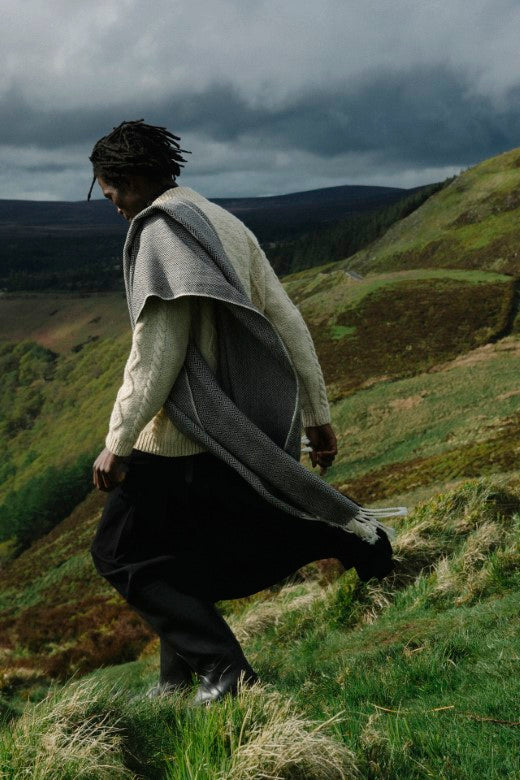
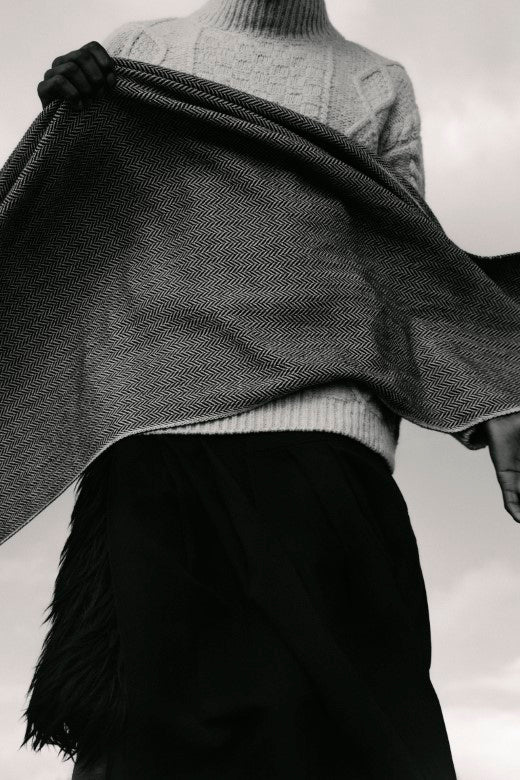
Time and again our customers revel in the unparalleled beauty and quality of the knitted and woollen garments and interior products made by these craftspeople. If you feel inspired, have a look at our Handknit Aran Box Jumpers, classic Jumpers, Sleeveless Vests and Cable Body Bibs, or our Handknit Wool Hats and Pixie Bonnets.
Author: Ali Crighton
Suggested articles

THE GLOSS x The Shopkeepers 100 Best Shops 2025

Image PWC Creative Businesswoman of the Year 2026

IRISH DESIGN AWARDS WINNERS 2025 & 2024