



Women / Men







Journal
Subheading
A Guide to Buying Linen Clothes
A Guide to Buying Linen Clothes
Linen clothes are the ones you reach for first on a warm morning — and still love ten years later. They are light, breathable and strong, and they get softer with every wash. They also reward people who buy carefully, because linen varies a lot in quality, cut and content.
This guide covers what to know before you buy: shirts, dresses and kaftans, trousers, scarves, wraps and pocket squares, and how to read the label so you know exactly what you are getting.
Why buy linen clothes?
Linen is made from the flax plant, and its long, strong fibres give clothes a few things that are hard to find elsewhere:
- Easy style. Linen is meant to look relaxed. Soft creases are part of its character.
- Breathability. Linen lets air move and draws moisture away from the skin, so it feels cool in warm weather.
- Durability. It is one of the strongest natural fibres, so a good linen piece can last a decade rather than a season.
- A softness that grows. New linen is a little crisp — but that's the last time it will be. Washing and wearing relax the fibres, and the linen fabric gets softer over time.
1. The linen shirt
If you are buying linen clothes for the first time, start with a shirt. It is the easiest linen piece to wear, and it works for men and women alike.
-
Getting the fit right
- Check the shoulders first. The seam should sit at the edge of your shoulder. Everything else is more forgiving.
- Leave yourself room. Linen has very little stretch, so avoid anything that feels tight across the back or chest. You want to be able to reach and move.
- Check the sleeves. Buttoned, they should reach the wrist bone. Rolled, they should sit comfortably on the forearm.
Ways to wear it
- Buttoned and tucked into tailored trousers for a smart summer look.
- Open over a white tee or vest, with the sleeves rolled.
- Under a jacket or gilet when the weather cools, as a crisp layer.
- Tonal, such as white with white or navy with navy, for a clean, simple outfit.
STABLE's Irish linen shirts for men and for women come in white, navy, denim blue, turquoise, moss green and dusty pink, so there is an easy way to bring colour in.
2. Linen dresses and kaftans
A linen dress is one of the most useful things in a summer wardrobe. It goes from morning coffee to an evening out with a change of shoes, and linen's natural drape keeps it from clinging when it is warm.
A kaftan is a looser, easier cut. It skims the body without needing a waist or a fitted bodice, which makes it a good choice for holidays, warm-weather events and days when comfort matters.
-
What to look for
- How it falls. Heavier linen hangs straighter, while lighter linen moves and flows. Neither is better — it depends on the look you want.
- Length. Check the hem against the shoes you will actually wear with it.
- Ease of movement. Sit down, raise your arms, and walk. A good linen dress should not pull.
Styling ideas
- Add a belt to give a looser dress some shape.
- Wear flat sandals by day and swap for a heel in the evening.
- Layer a linen scarf or a light jacket when it gets cooler.
Our Stripe Irish Linen Kaftan Dress and Irish Linen Trim Kaftan Dress are both easy to wear for weddings, holidays and summer dinners alike. Browse the rest of our women's clothing.
3. Linen trousers
Linen trousers (linen pants, if you are reading from across the Atlantic) are where most people worry about creasing. A little crumple is part of the character of linen, but the cut and weight you choose make a real difference.
-
What to look for
- Cut. Pleats and cuffs add a little weight at the hem, which helps trousers hang well rather than cling.
- Rise. A high waist sits at your natural waist and suits tucked-in shirts. A lower rise or drawstring waist is more relaxed.
- Length. The hem should skim the top of your shoe, or sit just above the ankle if you prefer a cropped look.
- Fabric weight. Heavier linen drapes and hides creases better. Lighter linen breathes more but creases more.
Keeping them sharp
- Hang them straight after washing so the creases fall out.
- Steam rather than press when you want a sharper line.
- Avoid sitting for long periods right after washing — that is when deep creases set.
STABLE's linen trousers include a straight Irish linen trouser, a cuff trouser, a high-waist pleated trouser and a striped drawstring trouser. For colder months, our tweed trousers in the same collection bring the same cut in a heavier cloth.
4. Linen scarves, wraps and pocket squares
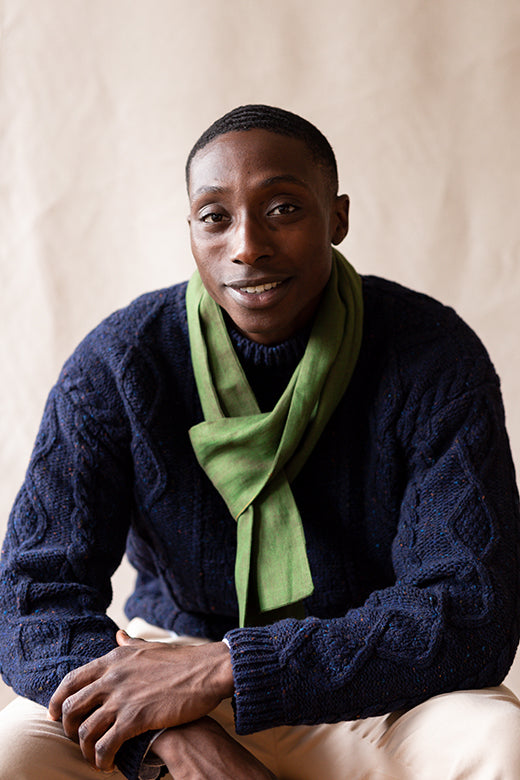
Linen accessories are the easiest way to wear linen all year round. A lightweight scarf adds a layer without adding bulk, and a linen pocket square takes a crisp fold while still looking relaxed — a sharper finish without looking stiff. Linen clothes work year-round this way: a scarf or light wrap carries a summer outfit into cooler evenings and autumn days without needing a full layer change.
Ways to wear a linen scarf or wrap
- Looped once at the neck for a light, everyday finish.
- Knotted loosely, or draped over the shoulders on a cool evening or a flight.
- Tied over the hair as a headscarf.
- Knotted onto the handle of a bag as an easy accent.
Pocket squares
A folded linen handkerchief in a jacket pocket is a small, classic detail. Linen holds a fold well, and a slightly imperfect fold looks better than a stiff one.
As a gift
A scarf paired with a linen handkerchief is a simple gift that works for almost anyone. STABLE has Irish linen scarves in women's and men's collections, in herringbone, stripe and check designs.
5. 100% linen vs linen blend: how to read the label
Whatever you are buying, the label is the most reliable guide to what is in a garment. Marketing words like "natural" and "premium" tell you very little. The composition label tells you the facts.
Under EU rules, the label must be firmly attached to the garment, and the fibres must be listed in decreasing order of percentage. Here is how that works in practice:
- "Linen" or "100% linen". The garment is made from linen only, and nothing else.
- "Linen blend". There is more than one fibre in the fabric. Check the percentages: the first fibre listed is the main one. A blend can still be a good garment, but if linen is a minority fibre, the cloth will behave more like the other fibre.
- "Linen look" or "linen effect". This describes the appearance of the fabric, not what it is made of. These fabrics often contain little or no linen, so check the composition.
- "Natural", "premium", "luxury". These are marketing words, not composition. Ignore them and read the label.
Where it was made
"Irish linen" should tell you where the cloth came from. It is worth asking where the fabric was woven and where the garment was made, because the two are not always the same. A brand that tells you both is a good sign.
Quality signs you can check in the shop
- Hold it to the light. The weave should be even, with no thin patches.
- Feel the weight. Good linen has some substance. It should not feel papery.
- Look at the seams and buttons. Seams should be neatly finished and buttons securely sewn.
- Do the crease test. Crumple a corner in your hand. Real linen creases. A "linen" fabric that never does is probably a blend.
Linen care: how to wash and look after linen clothes
Linen is easy to look after, and gentle linen care keeps it soft and strong.
- Wash cool. Machine wash at 30°C or less.
- Use a mild detergent. Avoid bleach and fabric softener.
- Dry naturally. Line dry or hang on a good hanger. Do not tumble dry.
- Steam iron while still a little damp for a crisper finish — or leave it relaxed.
- Dry clean if you prefer, or if the garment's label recommends it.
For all of our textiles, see our textile care guide, and for more on linen care, our guide to linen bed sheets: linen vs cotton, sizing and care.
Shop the STABLE linen range
- Irish linen shirts for men
- Irish linen shirts and tops for women
- Linen trousers for women
- Linen scarves for women
- Linen scarves for men
- Linen handkerchief
Buying linen clothes: what to remember
The best linen clothes are the ones you wear for a decade: well cut, honestly labelled, and looked after gently. Start with a shirt, add a dress or a pair of trousers, finish with a scarf, and read the label every time.
For care tips that go beyond clothing, see our guide to linen bed sheets: linen vs cotton, sizing and care here.