


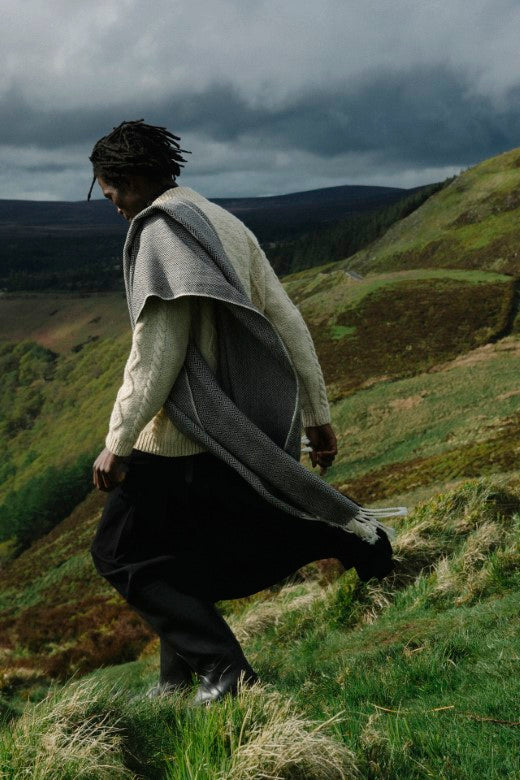








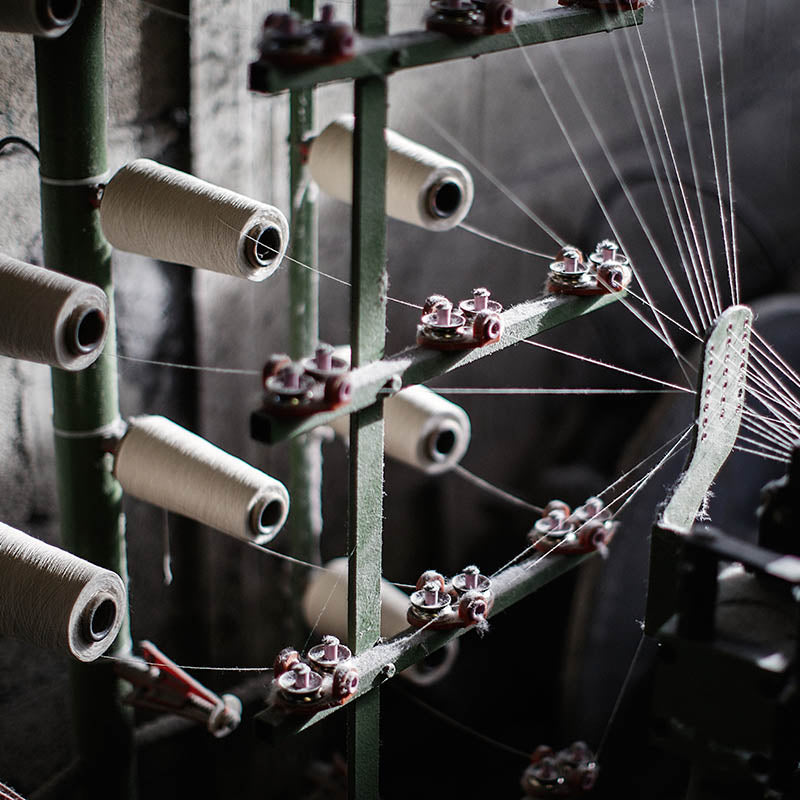



Donegal tweed does not begin on a loom. It begins in the landscape — in the slate-grey Atlantic light that flattens the hills of the northwest, in the heather-strewn ground and the lichen-covered stone, in the wool of sheep that have grazed this territory for centuries. By the time the cloth is finished, it carries all of this within it. The flecks of colour shot through the yarn — the nepp — are created by mixing small tufts of dyed fibre into the wool during spinning, deliberately echoing the colours of the land that surrounds the weaver. The palette is already there, outside the window.
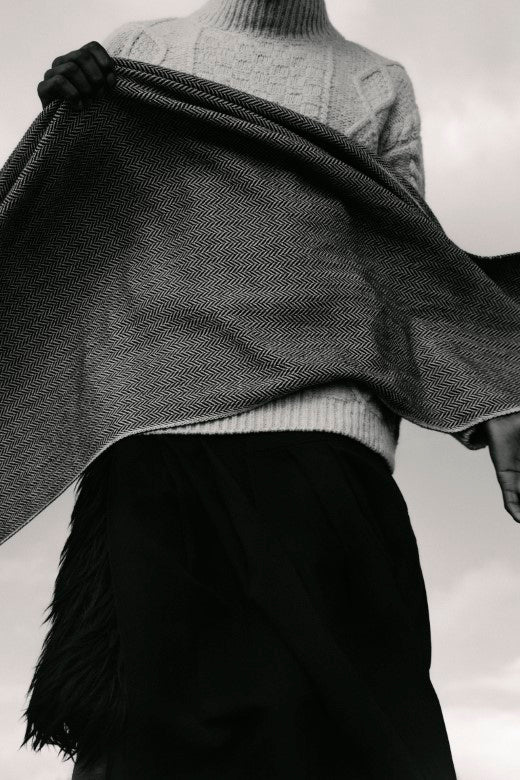
STABLE's relationship with Donegal tweed goes back to the very beginning. The brand launched in 2013 with a single product: a Donegal herringbone hand-woven tweed scarf. It was what Francie Duff and Sonia Reynolds believed in — a fabric that was genuinely Irish, genuinely made, genuinely worth preserving. Everything that has followed has been built on that conviction.
The Báinín Tweed Jacket is perhaps the clearest expression of what STABLE does with tweed. The Báinín — a traditional Irish working jacket, worn for generations by people in the west of Ireland who needed a garment that could carry them through the weather of the west — is reimagined here without compromising the material that gives it meaning. STABLE works with Molloy & Sons in Ardara, one of the last mills still weaving Donegal tweed by traditional methods. The cloth that comes from their looms has a weight and a texture that cannot be replicated in a factory.
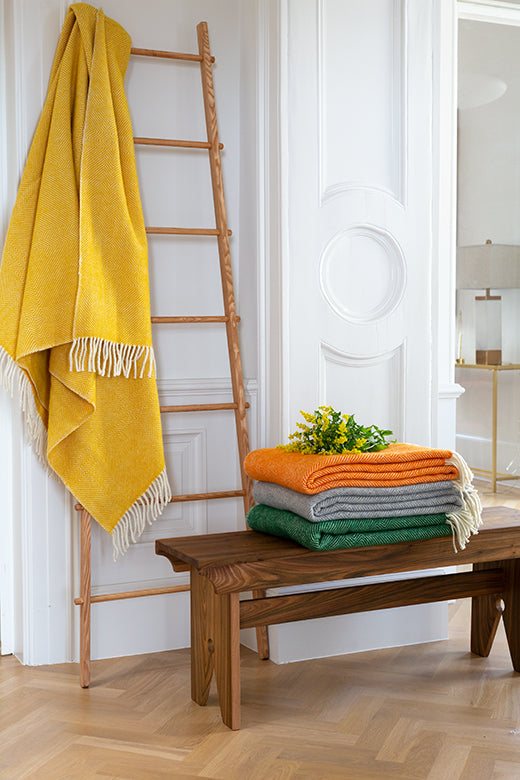
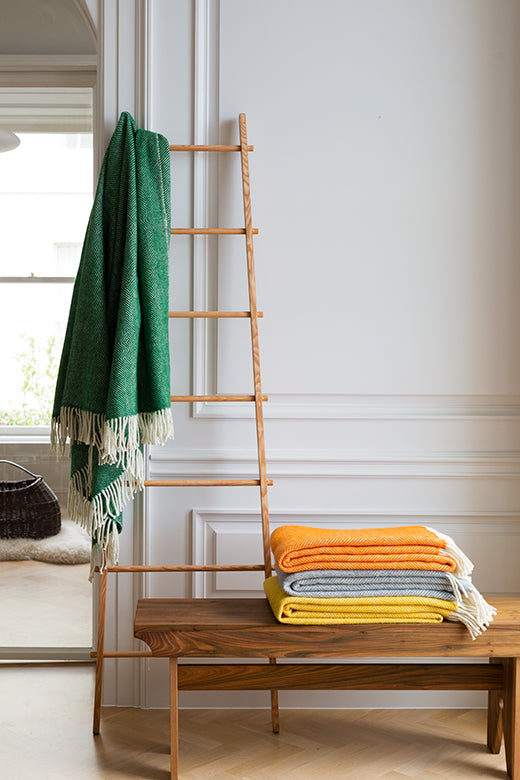
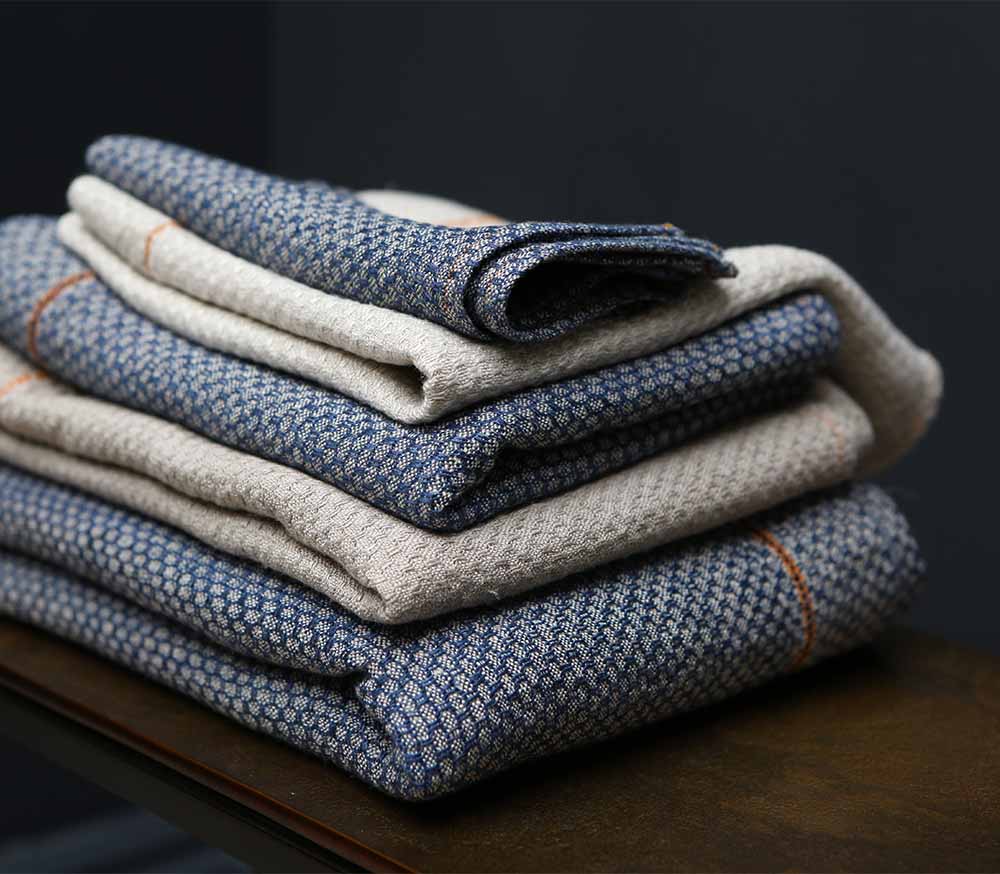
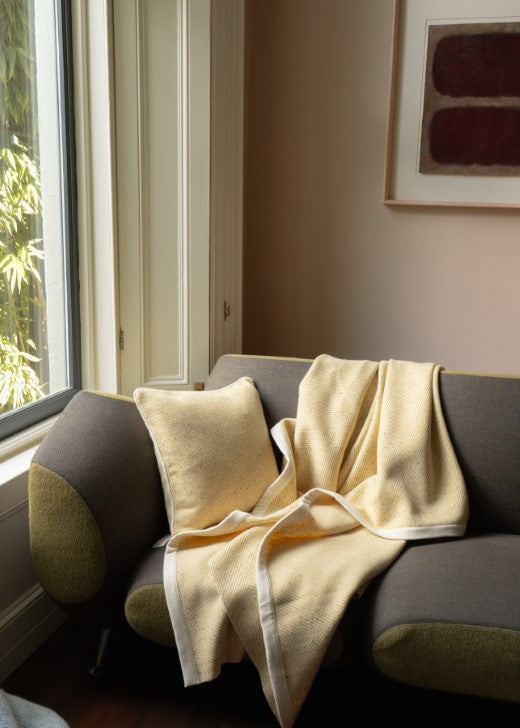
The Irish Tweed Gilet has become one of the quiet staples of the STABLE range — a heavy gauge, fleck tweed body warmer cut from Molloy cloth and lined with Irish linen. It exists in three colours: green, navy, and brown. Each one reads differently against the light. Worn over a shirt or under a coat, it is the kind of piece that earns its place in a wardrobe quickly and never loses it. Alongside it, the Irish Tweed Trousers and the handwoven pressed herringbone blankets — each finished with a leather-trimmed edge — complete a considered range of tweed pieces that hold together as a collection precisely because they come from the same tradition and the same mills.
A movement is now underway to give Donegal tweed Protected Geographical Indication (PGI) status — the same protection granted to Champagne or Parma Ham — meaning only cloth woven in Donegal using traditional techniques could carry the name. The mills STABLE works with are among those who have been pushing for this recognition. Not as a marketing label, but as a protection of livelihood, landscape, and craft.
The question of what makes an Irish tweed jacket worth buying comes down to one thing: time. The time taken to spin the yarn. The time taken to weave the cloth. The time it takes, worn season after season, to become entirely yours. A piece of Donegal tweed rewards that patience. It is not made to be replaced. It is made to last a lifetime — and then some.


